How to Break In a New Badger Hair Shaving Brush: The Right Way and the Wrong Way
When your new badger brush arrives, you can't wait to use it.
So you load it immediately, face lather enthusiastically, but maybe something feels off: the tips feel slightly rough, the lather is inconsistent, the knot doesn't have the soft, flowing feel you expected from the reviews.
If you recognize this, don't worry: nothing is wrong with the brush. You're just not through the break-in period yet.
Every quality badger hair knot, including the two-band HD knots we used at Leonidam brushes, needs a handful of uses before it reaches its full potential.
This guide explains what's actually happening during that period, what to do, and what to avoid.
Why Badger Knots Need Breaking In
When a badger knot is new, the individual hairs are still in the configuration they were tied in: the bundle is compact, the tips, particularly on HD gel-tip knots, may feel slightly waxy or stiff at the very end.
Two things happen during the break-in period:
The hairs separate and realign.
As the knot gets wet and worked against your face and hand, the individual hairs find their natural positions relative to each other. They stop moving as a single rigid bundle and start behaving as the flexible, dynamic structure they're meant to be.
The tips soften and open.
Gel tips, that you can find in our HD Gel knots, need a few sessions to fully hydrate and bloom. Once they do, the tip feel transforms from slightly textured to genuinely smooth.
This isn't a flaw in the manufacturing process, but rather an inherent property of real, unprocessed badger hair. Brushes that feel perfect out of the box typically use more heavily processed hair, which sacrifices longevity and performance for immediate comfort.
How Many Uses Does It Take?
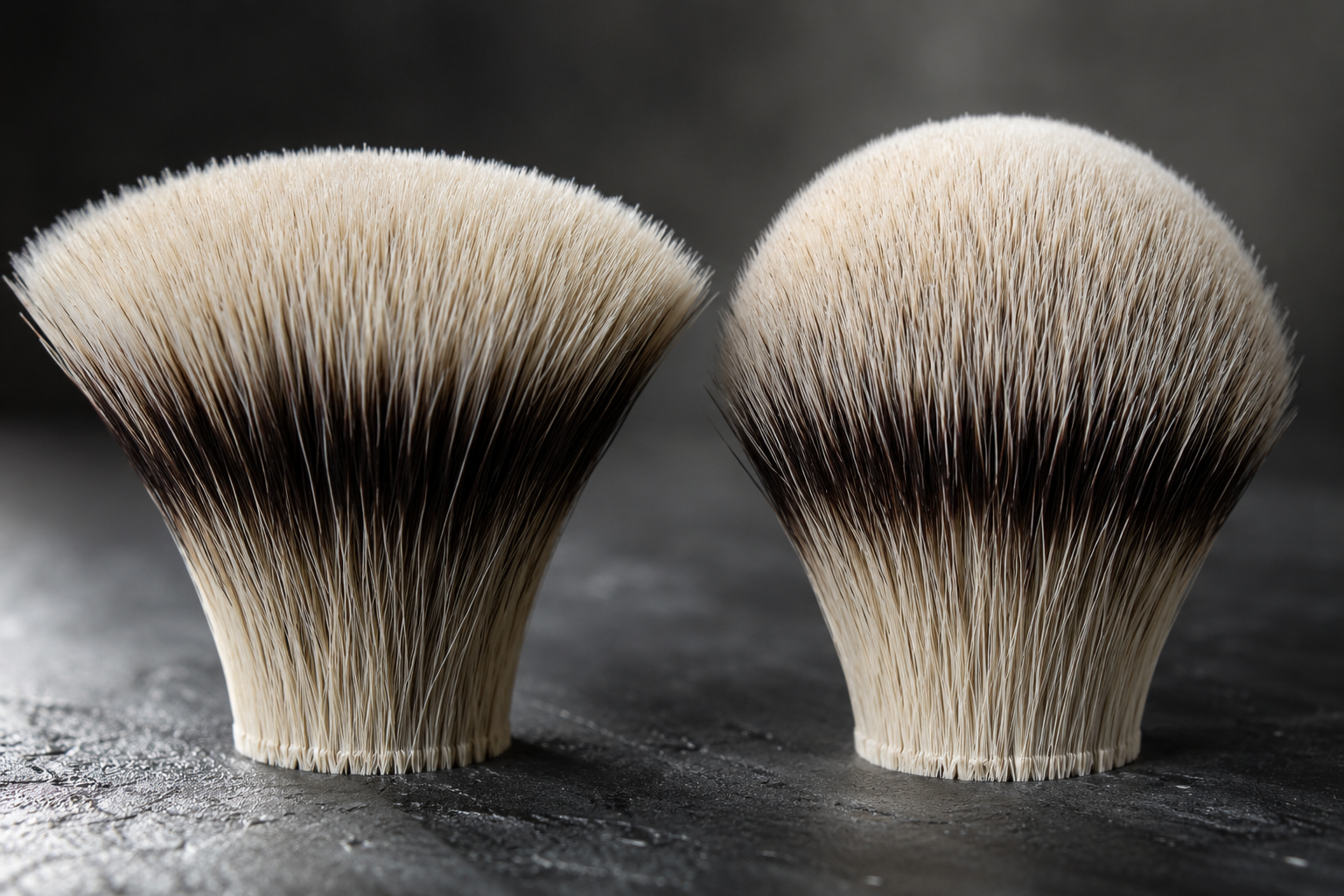
For a Leonidam two-band HD knot, fan or bulb, expect 3 to 5 uses before the brush reaches consistent performance.
The gel tips open fastest on fan knots because the wider splay exposes more tip surface during use. Bulb knots take slightly longer because the converging tips have less immediate exposure.
By use 6 or 7, you'll notice the difference from use 1 is significant.
The brush will feel like an entirely different instrument: softer, more cohesive, more responsive.

The Right Way to Break In a Badger Brush
Step 1: Soak Before the First Use
Before you use the brush for the first time, soak the knot in warm water for 2 to 3 minutes. Not hot, but warm, since hot water accelerates hair deterioration over time and offers no break-in advantage.
Hold the brush with the knot pointing down into a small amount of warm water in your bowl or sink. The hairs will absorb water and the bundle will start to soften.
Don't rush this step: it's the most impactful thing you can do before the first lather.
Step 2: Load Gently on the First Use
The first use is not the time to test maximum soap loading. Work the brush against your soap with light, circular pressure for about 20 to 30 seconds. The goal is not to build the best lather of your life, but rather to let the knot experience movement with soap and water for the first time.
Step 3: Face Lather or Bowl Lather — Either Works
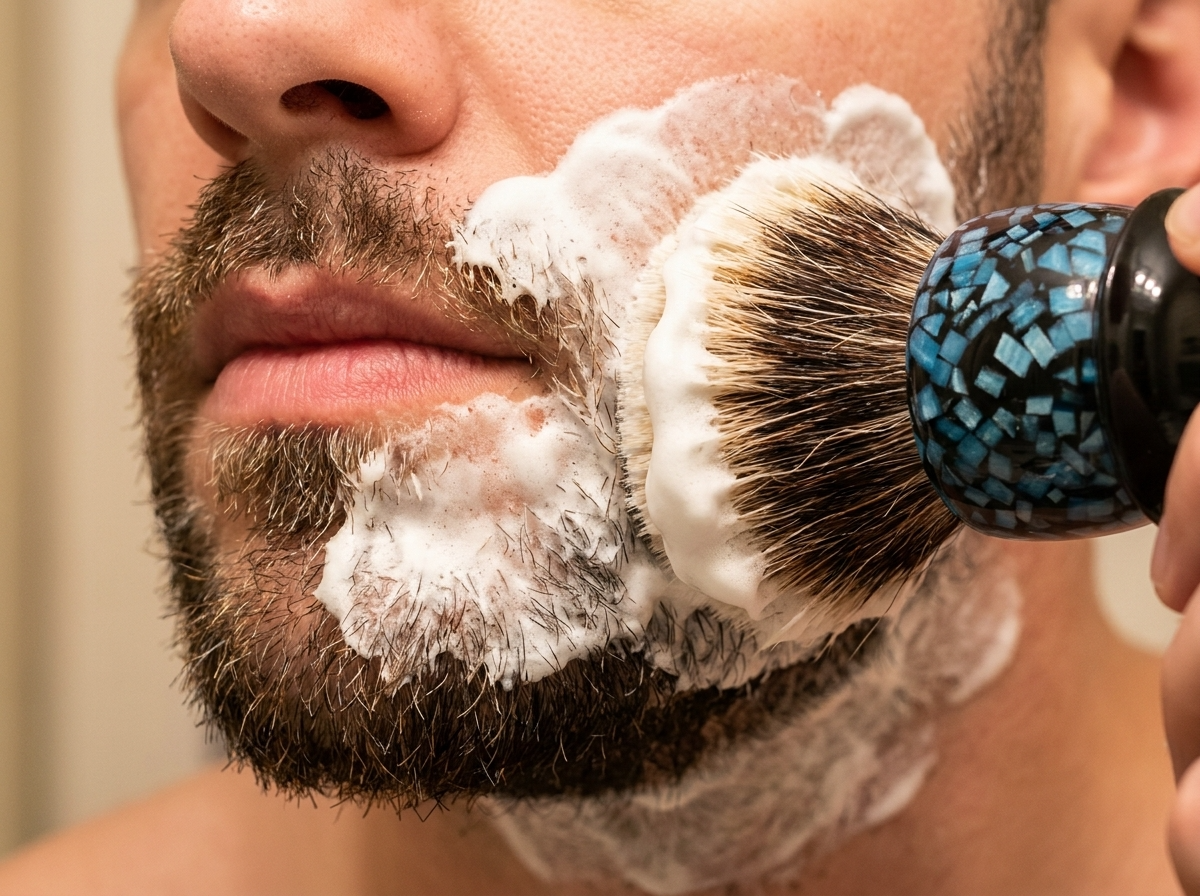
Breaking in doesn't require a specific lathering technique. Face lather, bowl lather, palm lather, all three will move the hairs and accelerate the process.
What matters is that the knot experiences proper wetting, loading, and movement during each use. A five-minute face lathering session is more effective at breaking in a knot than a 90-second rushed bowl lather.
Step 4: Rinse Thoroughly After Each Use
This is where most break-in problems originate: inadequate rinsing.
After each use, rinse the knot under warm running water while gently squeezing from the outside. You're pushing water through the bundle, not just over it. Rinse until the water running off the knot is completely clear, without soap residue.
Soap left inside the knot between uses dries and stiffens the hairs. It also concentrates at the tips, which is where gel tips are most sensitive to residue buildup. A properly rinsed knot breaks in faster and lasts significantly longer.

Step 5: Shake and Dry Correctly
After rinsing, give the brush three or four firm downward shakes to remove excess water. Then set it in an open area with the knot facing down if you have a stand, or resting on its handle if you don't.
The knot should air-dry completely before the next use. This typically takes 12 to 24 hours depending on ambient humidity and air circulation.
What Not to Do During Break-In
Don't Use Boiling Water
It's a myth that boiling water accelerates break-in. What it actually does is begin breaking down the protein structure of the hair. Warm water is sufficient.
Don't Store the Brush Flat While Wet
A wet knot stored flat traps moisture at the base of the hairs, near the glue that holds the bundle. Persistent moisture at the base is the primary cause of knot failure over time. Always dry knot-down or allow free air circulation around the entire brush.

Don't Assess the Brush on the First Use
The first use of a badger brush is not representative of its long-term performance. If something feels slightly rough or inconsistent on use one or two, this is expected. Reserve your judgment until use five or six.
Don't Overcrowd the Soap Loading
Pushing hard against the soap surface with excessive pressure during the first uses doesn't accelerate break-in. Light, consistent pressure over more strokes is better than heavy pressure over fewer.
The Gel Tips Question
On a new Leonidam two-band HD knot, the tips will feel slightly different in the first few uses. They may feel slightly tacky or textured at the very end. You may notice residual soap in the tips even after what feels like a thorough rinse. This is normal.
After the break-in period, the gel tips contribute to the exceptionally smooth tip feel that two-band badger is known for. The initial texture disappears. The residual soap retention becomes less pronounced as the tips hydrate properly and lather consistency improves.

After the Break-In: Ongoing Care
Once the break-in period is complete, maintenance is straightforward:
- Rinse thoroughly after every single use. Every time.
- Avoid soap buildup. If you detect a faint musty smell from the knot, soak in warm water with a small amount of white vinegar for 10 minutes, rinse thoroughly, and dry completely.
- No harsh cleansers. Dish soap, shampoo with sulfates, or any product with alcohol will dry out the hair and accelerate bristle degradation.
- Store dry. Never put a wet brush in a closed container or a bathroom cabinet without airflow.
A well-maintained two-band badger knot should last years. The break-in investment pays off across the entire lifespan of the brush.
Leonidam shaving brushes are handmade in Treviso, Italy. Every knot is hand-tied and inspected before assembly. Questions about your brush? Get in touch directly through the contacts page.