Fan vs Bulb Shaving Brush Knots: A Practical Guide for Wet Shavers
What "Fan" and "Bulb" Actually Mean
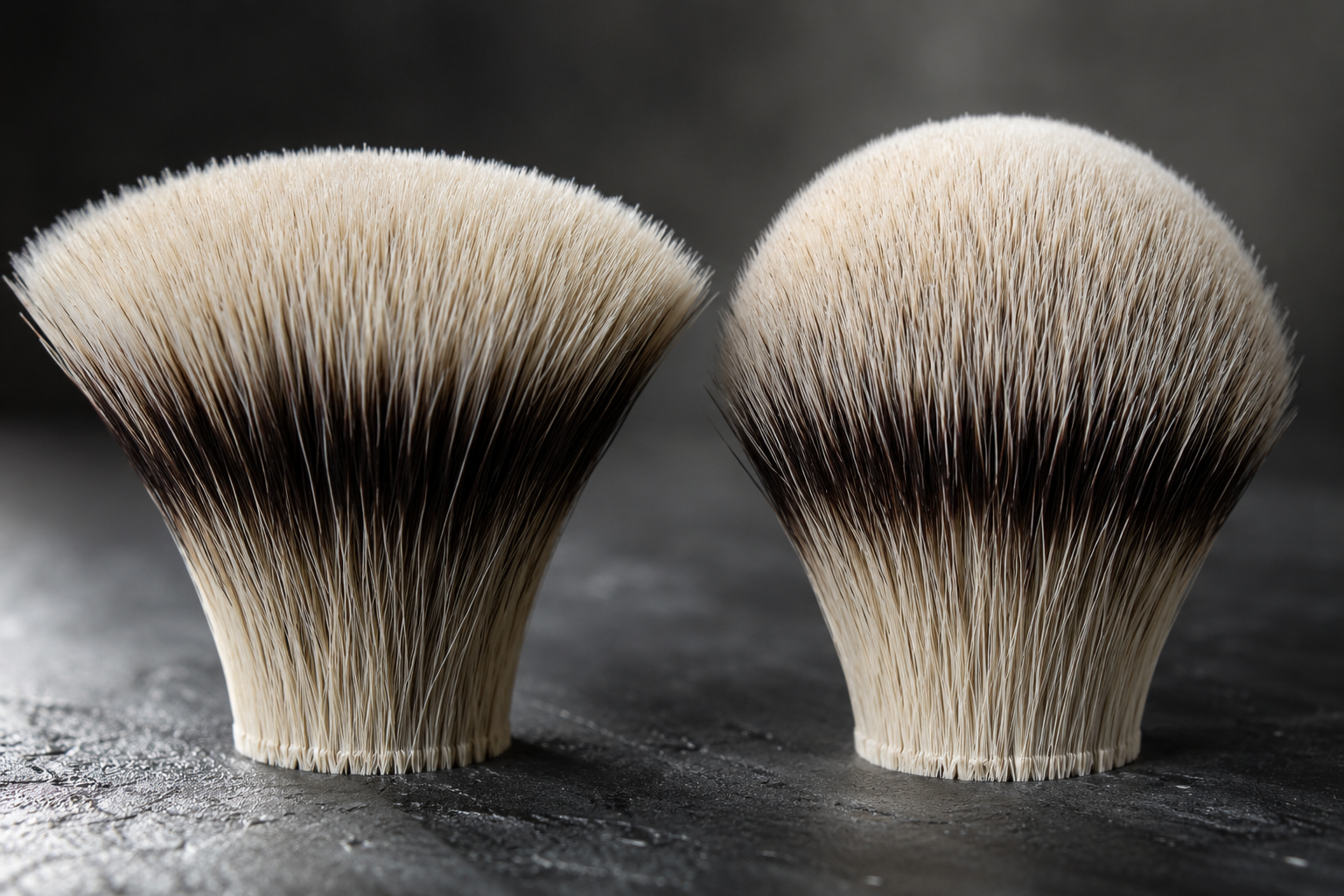
The terms describe the shape of the knot — the hair bundle — at its tip.
A fan knot spreads outward. The tips of the hairs splay into a wide, flat surface. Imagine opening your hand flat: that's a fan.
A bulb knot rounds inward at the tip. The hair converges toward the center, creating a domed, compact end. Imagine closing your hand slightly into a loose fist: that's a bulb.
Same hair and diameter, but different feel.

The Differences That Actually Matter
Backbone and Stiffness
Fan knots feel softer on the face. Because the hairs splay outward, they make contact with your skin over a wider surface, and each individual hair bends more easily. The result is a gentler, more cushioned sensation.
Bulb knots feel firmer. The converging tips create more resistance when pressed against the cheeks. Shavers who like to feel the brush working and want a more defined pressure tend to gravitate toward bulb.
Neither is objectively better. It's a personal preference. But "soft face feel" versus "defined pressure" is the clearest way to describe it.
Lather Generation
Fan knots build lather faster and more generously. The wide surface area picks up soap efficiently and incorporates air as you work the brush across the face. Face lathering with a fan knot is intuitive, almost forgiving.
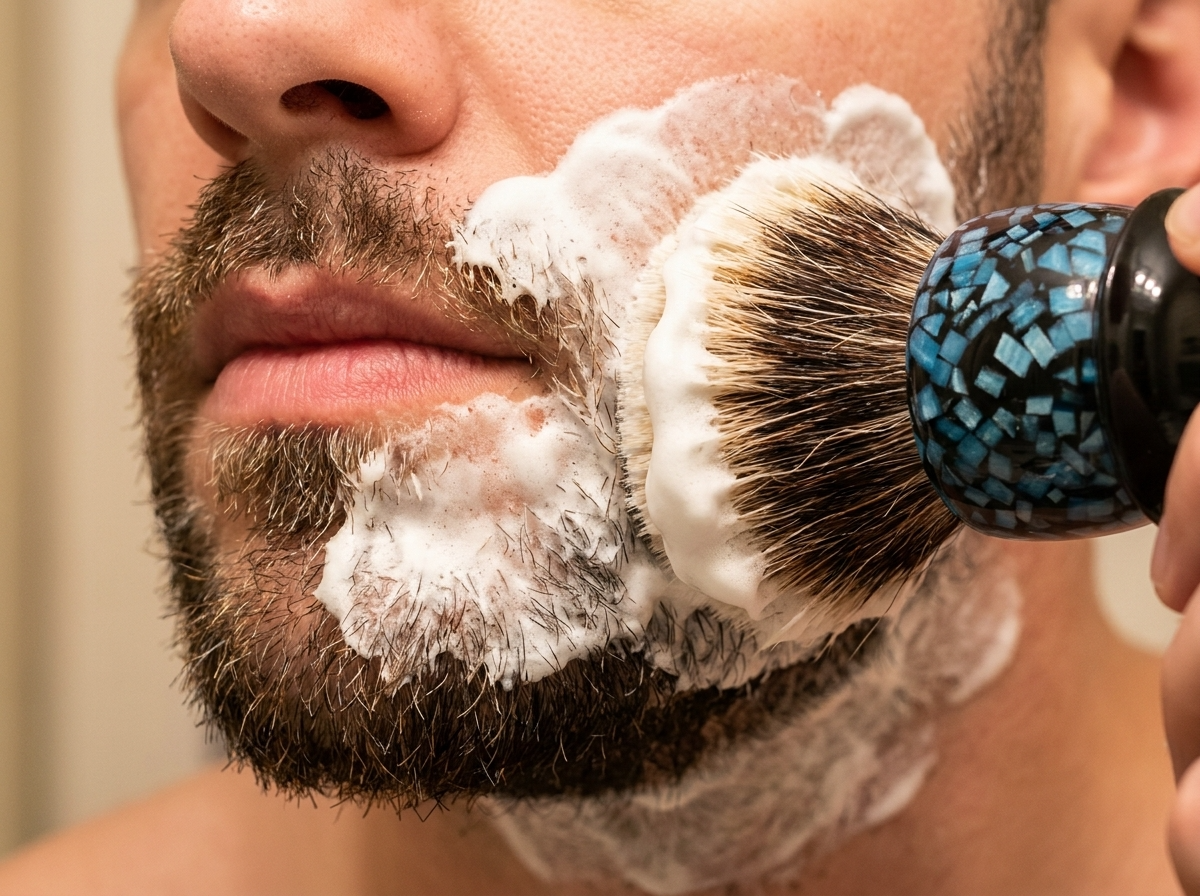
Bulb knots are more efficient with lather but require more technique. Since the tips converge, the brush delivers lather in a more concentrated area. Bowl lathering suits the bulb shape well: you load the brush, build lather in the bowl, and finally apply.
If you face lather exclusively, the fan gives you the most intuitive experience. If you bowl lather or use a scuttle, the bulb is the most suitable choice.
Tip Feel and Skin Sensitivity
Fan knots are almost universally described as "pillowy" on the first pass. The broad tip diffuses pressure across the cheeks and neck. For shavers with sensitive skin or those new to wet shaving, this is a significant advantage.
Bulb knots have a more defined tip contact. Some shavers love this: they describe it as a more luxurious, deliberate sensation. Others find it too focused, particularly on the neck.
If you've never used a premium badger brush before, starting with a fan is lower risk. If you're coming from another artisan brush and know you like density and definition, try a bulb.
Break-in Period
Fan knots open up quickly. After a few uses, the hairs settle into their natural splay and the performance stabilizes fast.
Bulb knots take slightly longer to reach their full potential. The convergent tips need a few sessions to bloom, separate properly and lose any initial stiffness. The payoff when they do is worth it, but set your expectations accordingly for the first three to five uses.
The HD Gel Tips Factor
All Leonidam two-band badger knots use HD gel tips, a specific characteristic of the hair batch that affects how the tips behave during use.
Gel tips are not a defect, but a deliberate feature of high-quality. The tips naturally retain a small amount of moisture and lather between uses, which is why some shavers notice residual soap in a well-rinsed brush. It dissipates as the knot breaks in.
On fan knots, gel tips contribute to an exceptionally soft initial contact. On bulb knots, they add a slight cushioning effect to the otherwise firmer tip feel.
If you've read about gel tips online and felt confused, this is the short version: they're fine, they're intentional, and they improve with use.

What Leonidam Customers Actually Choose
Looking at order data across all brush configurations: approximately three out of four customers choose the fan shape.
The 28mm HD Fan is our single most-ordered knot configuration.
That doesn't make the bulb inferior. It means the fan shape is a safer first purchase for someone who hasn't tried both. The bulb is a deliberate choice and customers who select it tend to know exactly why.
The Knot Diameter Question
Fan vs bulb is one choice. Diameter is another.
A 28mm fan and a 26mm fan behave differently beyond just size: the 28mm carries more hair, builds lather faster, and has more visual presence. On the other hand, the 26mm is lighter, more maneuverable, and suits narrower handles or shavers who prefer less density.
If you're choosing a Leonidam brush and trying to configure it correctly: start with 28mm HD Fan unless you have a specific reason to go smaller or prefer a firmer knot shape, in which case 28mm HD Bulb is the logical next consideration.
Summary
| Fan | Bulb | |
|---|---|---|
| Tip shape | Splayed, wide | Rounded, converging |
| Face feel | Soft, cushioned | Firm, defined |
| Best for | Face lathering, sensitive skin | Bowl lathering, those who like pressure |
| Break-in | Fast | Slightly longer |
| Most popular at Leonidam | Yes | No, but deliberate choice |
There's no wrong answer, but there is a choice that matches your shaving style better than the other.
All Leonidam shaving brushes are handmade in Treviso, Italy. Knot configurations are available across the On Demand collection.